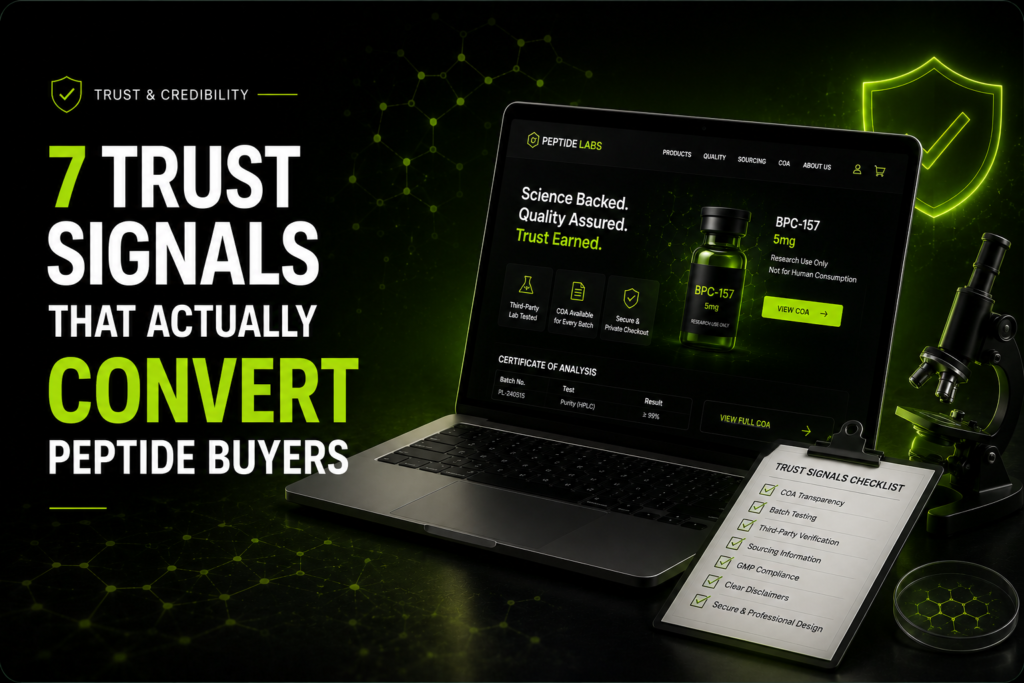
Peptide buyers are not typical online shoppers. Many are researchers, clinicians, or serious biohackers who read ingredient panels, cross-reference lab data, and know exactly what a legitimate Certificate of Analysis should look like. Generic e-commerce trust badges the little padlock icons and “as seen on” logos mean almost nothing to this audience. What actually moves them toward a purchase is verifiable, specific, and easy to find. Here are the seven signals that consistently do the work.
1. Certificates of Analysis, Linked Directly on the Product Page
This is the single most important trust signal in the entire industry, and it’s also the most commonly mishandled. A COA buried in a footer archive or available only “on request” signals that transparency is an afterthought. The strongest implementations link the COA directly from the product page, tied to the specific batch the customer is buying — not a generic file that could be from any batch, any time.
2. Batch and Lot Number Traceability
Buyers who care about COAs also care about knowing the COA they’re looking at actually matches the product in their cart. Displaying batch or lot numbers on product pages, and making it easy to match that number against the corresponding lab report, closes a credibility gap that a lot of sites leave wide open.
3. Third-Party Lab Verification, Not Just In-House Testing
In-house testing is better than nothing, but a scientifically literate buyer knows the difference between a company testing its own product and an independent lab doing it. Naming the third-party lab, and ideally linking to it, adds a layer of credibility that self-reported data can’t match on its own.
4. Clear Sourcing and Manufacturing Information
Where a compound is manufactured, under what conditions, and by whom is information this audience actively looks for. A vague “sourced responsibly” line reads as evasive. Specifics — country of manufacture, facility standards, synthesis method at a high level — signal that a company isn’t hiding anything about its supply chain.
5. Detailed, Accurate Product Specifications
Molecular weight, sequence, purity percentage, storage requirements — this level of technical detail, presented clearly rather than crammed into a tiny spec sheet, tells a knowledgeable buyer that the people running the site actually understand the product. Thin, marketing-only product pages are an immediate red flag for this audience.
6. Consistent, Careful Language Around Use and Classification
Ironically, one of the strongest trust signals is restraint. A site that makes therapeutic claims it can’t back up, or that blurs the line between research-use framing and consumer health promises, reads as either uninformed or dishonest to an audience that knows the regulatory landscape. Precise, consistent language across every page builds more credibility than persuasive copywriting ever will with this group.
7. Real Reviews From a Believable Customer Base
Generic five-star review widgets with vague, enthusiastic comments don’t land with this audience the way they might in other e-commerce categories — if anything, over-polished reviews can read as fabricated. Reviews that reference specific use cases, sourcing questions, or comparisons to other batches feel authentic, and displaying them with minimal editing preserves that credibility.
The Common Thread
Every one of these signals works the same way: they give a skeptical, technically literate buyer something specific to verify, rather than something to simply believe. That’s the core difference between designing for trust in the peptide space and designing for trust in most other e-commerce categories — vague reassurance doesn’t convert here. Verifiable specificity does.
Where This Fits Into Your Website
None of these are content additions you can bolt onto a finished site as an afterthought. COA access, batch traceability, and detailed specs all need to be built into your product page architecture and your backend data structure from the start, so that adding a new product doesn’t mean manually rebuilding trust signals from scratch each time. That structural planning is exactly where a website partner who understands this industry earns their keep.
This article is for general informational purposes and isn’t legal or compliance advice. Peptide businesses should consult qualified legal counsel regarding marketing claims, product classification, and regulatory requirements specific to their jurisdiction and products.
