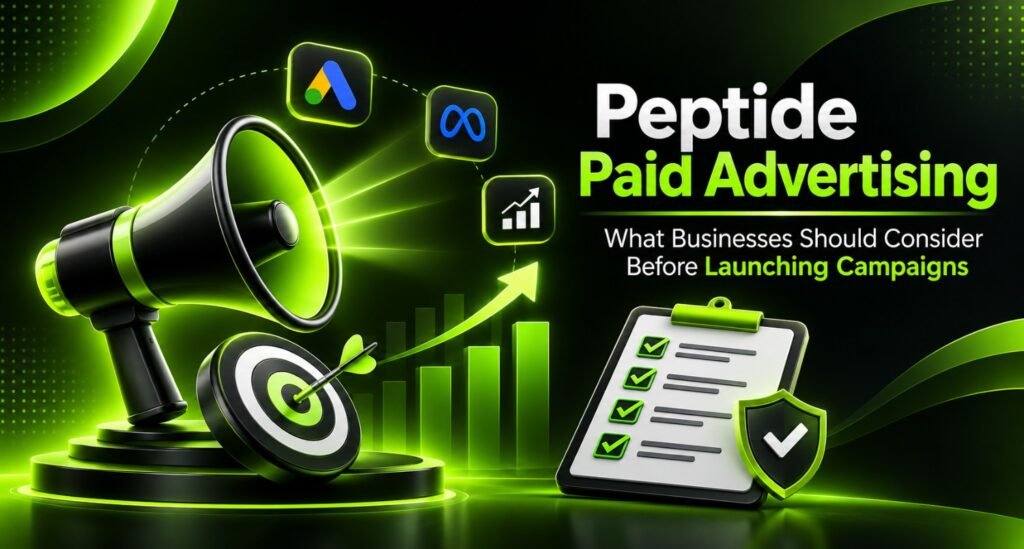
Paid advertising can help businesses reach relevant audiences, build brand awareness, and generate qualified traffic. However, promoting peptide-related products comes with additional considerations that businesses must understand before investing in campaigns. From platform policies to website readiness, every part of the advertising process needs careful planning.
Peptide Paid Advertising requires more than creating attractive ads and selecting an audience. Businesses need to understand whether their products and services are eligible for promotion, what claims they can make, and whether their website meets the requirements of their target markets.
For peptide businesses, the first step is to build a reliable digital foundation. A professional website, clear product information, transparent business details, and a well-planned marketing approach can support broader business growth, even when certain paid channels are unavailable.
Understand Advertising Policies Before Investing
One of the first considerations in Peptide Paid Advertising is understanding the policies of the platforms you intend to use. Google, Meta, and other advertising networks have specific rules for healthcare products, pharmaceuticals, supplements, and potentially restricted substances.
These policies can affect whether a business can promote a product, use particular keywords, display certain claims, or direct users to specific landing pages.
For example, Google Ads restricts certain healthcare-related promotions and requires certification for some categories. Its policies also identify specific unapproved substances and products that cannot be promoted. The rules can vary depending on the product and target location.
This makes it important to review the relevant Peptide Advertising Policies before planning a campaign. Businesses should not assume that a product is eligible simply because it is legally available in a particular market.
Understanding Peptide Advertising Restrictions early can also help businesses avoid unnecessary campaign preparation costs, repeated disapprovals, and potential account restrictions.
Check Product and Business Eligibility
Not every peptide-related business operates under the same model. Some businesses provide research-related products, while others operate in pharmaceutical, healthcare, or laboratory supply categories. The applicable advertising requirements may differ significantly.
Before considering Peptide Paid Advertising, businesses should identify:
- The exact products or services they intend to promote.
- The intended audience and geographic markets.
- The legal and regulatory requirements that apply to those products.
- Whether the advertising platform permits the relevant category.
- Whether certification, documentation, or prior approval is required.
Google’s pharmaceutical manufacturer policy, for example, states that suppliers of peptides and compounds for commercial laboratories may advertise only in Canada and the United States under the specified policy category. This is a category-specific rule, not a general approval for every peptide business or product.
Businesses should review the current requirements directly with each platform and seek qualified regulatory advice when necessary.
A responsible Peptide Marketing Strategy begins with eligibility checks rather than assuming that every advertising channel is available.
Evaluate Google Ads Requirements
Google Ads can provide search-based visibility for eligible products and services. However, healthcare and medicine-related campaigns are subject to additional requirements that businesses must understand before launching.
Companies researching Peptide Google Ads should review the healthcare and medicines policy, location-specific requirements, and any applicable certification process.
The phrase Google Ads Peptides may cover different business models and product categories, so there is no single approval rule that applies to every advertiser.
Before preparing campaigns, businesses should consider:
- Whether their product category is permitted.
- Whether the target location allows the promotion.
- Whether Google certification is required.
- Whether the website and landing pages meet policy requirements.
- Whether the proposed keywords and advertising claims are permitted.
Google may review both the advertisement and its destination. This means a compliant-looking ad does not automatically make the entire campaign eligible.
For businesses considering Peptide Paid Advertising, checking the destination website is just as important as reviewing the ad copy. A landing page containing restricted product claims or unsupported medical statements can create additional compliance concerns.
Understand Meta Ads Restrictions
Meta Ads can help eligible businesses build awareness and connect with relevant audiences through Facebook and Instagram. However, its advertising standards also restrict certain pharmaceutical products, unsafe substances, and other categories.
Businesses researching Peptide Meta Ads should review Meta’s current Advertising Standards and determine whether their specific products and promotional approach are permitted.
The eligibility of a campaign should never be assumed based on the fact that similar advertisements appear elsewhere. Platform decisions can depend on the product, claims, creative material, destination page, and other contextual factors.
When planning Peptide Ads, businesses should pay attention to:
- Product eligibility and restricted categories.
- Advertising claims and promotional language.
- Images and creative materials.
- Landing-page content.
- Target audience and applicable age restrictions.
- Account and business compliance requirements.
A Peptide Advertisement should accurately represent the business and must not make misleading or unsupported claims.
Businesses should also avoid trying to disguise restricted products, hide landing-page content, or use alternative wording to bypass review systems. Such practices can create further account and compliance risks.
Prepare Your Website Before Launching Campaigns
A professional website is an important part of Peptide Paid Advertising because it provides visitors with information about the business after they interact with an advertisement.
Even when a campaign receives clicks, an unclear or poorly structured website can make it difficult for visitors to understand the business and take the next step.
Before launching Paid Advertising for Peptide Businesses, review the website’s overall structure and user experience.
Important website elements include:
- Clear navigation: Visitors should be able to find important pages without confusion.
- Professional design: A consistent visual identity helps establish a credible online presence.
- Mobile responsiveness: Website pages should work smoothly across different screen sizes.
- Page speed: Slow-loading pages can negatively affect user experience.
- Clear business information: Contact details, company information, and relevant policies should be easy to locate.
- Relevant landing pages: Each permitted campaign should direct visitors to an accurate and relevant destination.
These improvements create a stronger foundation for Peptide Digital Marketing and help businesses maintain a consistent experience across their online channels.
Create Relevant and Transparent Landing Pages
Landing pages play an important role in connecting advertising messages with website content. When visitors click an advertisement, they expect the destination page to provide relevant and accurate information.
For Peptide Paid Advertising, landing-page content should be reviewed for both user experience and advertising compliance.
A well-structured landing page should explain the business clearly, use accurate descriptions, and provide relevant information without making unsupported health or performance claims.
Businesses should also avoid exaggerated promises, misleading product descriptions, or claims that imply a product can diagnose, treat, cure, or prevent a medical condition unless such claims are properly authorized and permitted.
A professional landing page should focus on clarity, transparency, and usability. This supports a more trustworthy website experience while helping businesses maintain consistency across their marketing channels.
Plan Your Advertising Budget Carefully
Budget planning is another important part of Peptide Paid Advertising. Businesses should not invest in campaigns until they understand the available advertising options and have confirmed that their products and promotional materials are eligible.
Instead of setting a budget based on assumptions, companies should first evaluate their business goals, market conditions, and available channels.
A practical budget-planning process includes:
- Identifying the main business objective.
- Researching the target market and audience.
- Reviewing the costs of eligible advertising channels.
- Establishing a realistic testing budget.
- Defining the metrics that will be used to measure results.
- Reviewing campaign performance before increasing investment.
If a product cannot be promoted through a particular platform, businesses should not attempt to force a campaign through that channel. They can instead evaluate other permitted marketing activities that support their broader business objectives.
A well-planned Peptide Paid Marketing approach should prioritize sustainable growth instead of focusing only on short-term traffic.
Understand Your Audience and Market
Effective advertising begins with understanding the people or organizations a business intends to reach. Different peptide-related businesses may serve different audiences, including research organizations, commercial laboratories, or other eligible professional buyers.
Peptide Audience Targeting should be based on the business model, the intended market, and the platform’s targeting rules.
Before planning any campaign, businesses should research:
- Their intended audience’s needs and interests.
- The markets where their products or services can legally be promoted.
- The questions potential customers commonly ask.
- The information visitors expect to find on the website.
- The most relevant communication channels for their business.
This research can also improve website content, product information, and organic search visibility.
For Marketing for Peptide Brands, audience research should guide the overall communication approach rather than relying on broad assumptions about customer behavior.
Develop a Strong Website and Marketing Foundation
Paid campaigns are only one part of a wider digital presence. Businesses should also invest in the website, search visibility, and content that help visitors understand their brand.
Digital Marketing for Peptide Brands can include several activities, depending on the business model and applicable advertising requirements.
These may include:
Search Engine Optimization
SEO helps improve a website’s visibility in relevant organic search results. Keyword research, technical improvements, optimized page content, and internal linking can support a stronger search presence.
Content Marketing
Useful and accurate website content can answer relevant questions, explain business services, and help visitors understand a company’s expertise.
Social Media Presence
Consistent social media activity can support brand communication and audience engagement. Businesses should ensure that both organic posts and paid promotions follow the applicable platform standards.
Email Marketing
For businesses with an appropriate, permission-based audience, email marketing can provide a direct channel for sharing company updates, educational information, and relevant business announcements.
These activities can strengthen Peptide Brand Visibility without depending entirely on paid campaigns.
A balanced approach to Peptide Marketing helps businesses build a more consistent online presence while adapting to changing platform requirements.
Track Performance and Measure Business Results
For campaigns that are eligible to run, performance tracking helps businesses understand whether their advertising investment is supporting their objectives.
Before launching Peptide Paid Advertising, businesses should define the metrics they want to monitor.
Depending on the campaign and platform, useful measurements may include:
- Website visits and traffic sources.
- Landing-page engagement.
- Relevant form submissions.
- Qualified business inquiries.
- Cost per permitted conversion.
- Overall campaign expenditure.
- Return on advertising investment, where measurable.
Analytics tools such as Google Analytics 4 and Google Tag Manager can help businesses understand website activity and measure appropriate user interactions.
However, tracking should be configured responsibly and in accordance with privacy requirements. Businesses should also avoid measuring clicks as the only indicator of success.
A clear reporting process makes it easier to evaluate Peptide Campaign Performance and identify areas where the website or marketing approach may need improvement.
The objective of Peptide Paid Advertising should be to support meaningful business outcomes, not simply generate impressions or traffic.
Explore Alternative Marketing Channels
Paid advertising may not be available for every peptide product or business category. In these situations, companies can consider other permitted ways to build their online presence.
SEO, educational content, email marketing, and organic social media can all contribute to a broader digital marketing approach, provided the activities comply with applicable laws and platform policies.
For example, businesses can improve their website structure, publish accurate informational content, strengthen their service pages, and develop a consistent brand identity.
Online Advertising for Peptide Businesses should not be treated as the only route to online growth. A website supported by useful content and a clear SEO foundation can continue to attract relevant organic visitors.
This broader approach can support Peptide Customer Acquisition by helping potential customers find reliable business information through appropriate channels.
How AminoWebsites Supports Peptide Business Growth
At AminoWebsites, we understand that a professional website is an important foundation for peptide businesses looking to strengthen their online presence. Before investing in marketing campaigns, companies need a website that communicates their brand clearly and provides a smooth experience for visitors.
Our website design and development services focus on building professional, user-friendly websites that support business objectives. From website structure and responsive design to ecommerce functionality and SEO, we help businesses create a stronger digital foundation.
For companies exploring Peptide Paid Advertising, website readiness is an important consideration. A well-organized website can make it easier to present business information, guide visitors through relevant pages, and support broader digital marketing activities.
Aminowebsites can help with:
- Professional peptide website design and development.
- Ecommerce website structure and functionality.
- Search engine optimization.
- Website performance and user experience improvements.
- Landing-page design and website content structure.
Whether a business is launching a new website or improving an existing one, the right website foundation can support its long-term digital growth.
Want to build a professional online presence for your peptide business? Get a Free Consultation with AminoWebsites and discuss your website design, development, and SEO requirements.
Frequently Asked Questions
Is paid advertising suitable for every peptide business?
No. Eligibility depends on the products or services being promoted, the advertising platform’s policies, applicable regulations, and the locations being targeted. Businesses should verify eligibility before preparing campaigns.
Can peptide businesses advertise on Google Ads?
Some peptide-related business categories may be eligible under specific conditions and location restrictions. Google’s policy identifies certain requirements for suppliers of peptides and compounds for commercial laboratories. Businesses should review the applicable policy rather than assume general approval.
Are peptide products allowed in Meta Ads?
Eligibility depends on the specific product and Meta’s current Advertising Standards. Businesses should review the relevant restricted goods, pharmaceutical, and unsafe substances requirements before launching promotions.
Why is website quality important before launching paid campaigns?
A professional website helps visitors understand the business, navigate relevant information, and contact the company. It also provides an important destination for any advertising activity that is permitted.
What should peptide businesses do if paid advertising is restricted?
Businesses can consider other compliant marketing activities, including SEO, useful website content, email marketing, and organic social media. These channels can help strengthen online visibility without relying entirely on paid promotions.
How can AminoWebsites help peptide businesses?
AminoWebsites provides website design and development, ecommerce solutions, and SEO services. These services help peptide businesses build a professional online presence and create a stronger foundation for their digital growth.